

A lamb is dead on the hill, its eyes gone and its flank opened. A raven lifts off the carcase as the shepherd walks up. Everything that mattered happened in the minutes before that, and nobody saw it. That gap — between what is found and what can be proved — is the whole of the argument about ravens and lambs, and it has been running in the uplands for longer than anyone now farming can remember.
An old quarrel with a long memory
Ask a hill farmer and you will hear about ravens working across a lambing field, dropping onto lambs that have barely stood, eyes taken from animals still breathing. Ask a conservationist and you will hear about a bird that is clever, opportunistic and almost always first at a carcase somebody else created. Both accounts come from people who know their ground, and both can be true in the same parish on the same afternoon.
What is not in dispute is that ravens are remarkable birds: adaptable, quick to learn, and persecuted for centuries because of it.
What ravens actually eat
Ravens are generalists, and their diet shifts with whatever the season offers. Food remains and pellets examined in Britain and across Europe keep turning up the same broad shopping list:
- Carrion of every size, from deer and sheep down to rabbits and birds
- Beetles, grubs, leatherjackets and other invertebrates
- Eggs and nestlings of other birds
- Voles, mice and other small mammals
- Grain, berries and fruit
- Afterbirth, spilled feed, silage and household waste
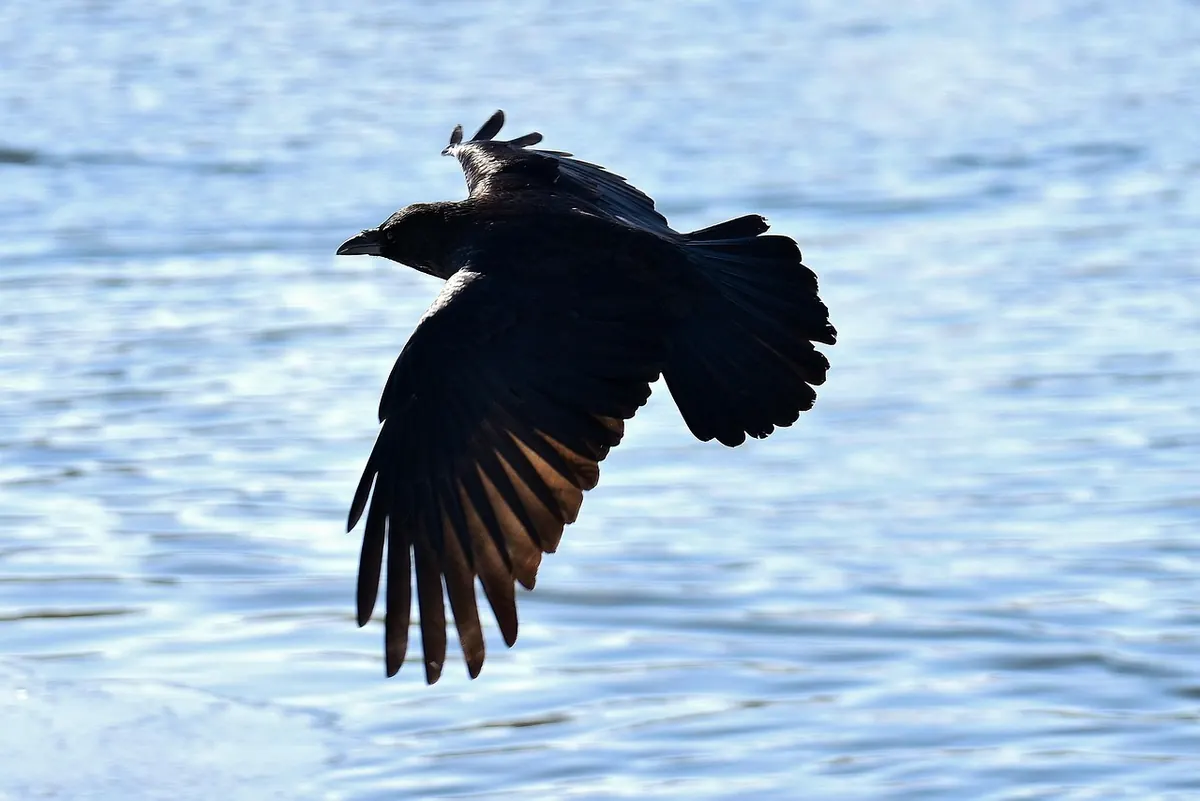
Note what is missing from that list: a bird built for killing healthy prey. A raven has no talons for gripping and holding; its feet are for perching and walking. Its beak is heavy and strong, excellent for tearing into something already opened, much less useful for subduing a lamb that is on its feet and trying to get away.
The trouble with what you find at a carcase
Ravens find dead animals fast. A lamb that died of exposure, mismothering, a difficult birth or simple starvation is food within minutes, sometimes while the ewe is still standing over it. So a raven on a fresh carcase proves one thing only: that a raven was on a fresh carcase.
The order of damage makes this worse. Soft tissue goes first — eyes, tongue, then the navel and the openings — because that is easiest to reach and easiest to tear. A lamb found with its eyes pecked out is showing you the signature of feeding, not necessarily of attack. From two hundred metres away, through a hedge or in flat dawn light, a bird standing on a dead lamb and a bird killing a live one look exactly the same.
What the field evidence tends to show
Timing is the tell
Where losses have been examined properly — carcases looked at by a vet, injuries mapped, the state of the fleece and the navel checked — most lambs found with raven damage had died of something else first. Cold, wet, windy weather and a thin ewe do far more damage to a lambing percentage than any bird.
Where the real problem lies
That is not a clean bill of health. Shepherds in several upland areas describe, and some field observations support, ravens taking eyes, tongues and navels from lambs that are alive but down and unable to rise. A lamb in that state is dying anyway, but the attack shortens it, and the loss is still a loss. The sequence runs from a weak lamb to a raven, not from a raven to a healthy lamb.
Why the belief holds on in the uplands
Three things keep it alive. The first is money: in a hill flock every lamb counts, and a bad spring is remembered for years. The second is that raven numbers have risen across much of Britain since persecution eased, so more birds are being seen on ground that used to hold few. The third is harder to measure. Ravens have been birds of omen in British storytelling for centuries, and it is difficult to watch one standing on a dead lamb without reading a verdict into it. Shepherds are usually right that something has changed. The disagreement is about what.
What the law allows
Ravens are protected. Killing, injuring or taking one, or interfering with a nest or eggs, is an offence unless it is done under licence. In some upland areas licences can be issued to prevent serious damage to livestock, and the rules differ between England, Scotland, Wales and Northern Ireland. If you believe you have a genuine, persistent problem, the first call is to the statutory nature conservation body for your part of the UK. For anything with legal consequences, take proper advice from your rural land agency or solicitor rather than acting on what a neighbour did last year.
If you find a lamb in this state
- Photograph it where it lies, before you move anything. Include the ground, the distance to the ewe and the weather.
- Write down what you can actually see: was the lamb licked dry, was the navel wet, single or twin, had the ewe claimed it.
- Read the damage in order. Eyes and tongue gone with an otherwise intact body points to feeding. Bruising, punctures, blood in the fleece or damage around the neck and spine point somewhere else.
- Get a post-mortem if the loss matters. A vet can separate an animal that died and was then fed on from one attacked while alive. That distinction is the case, and it cannot be made from a photograph.
- Keep a season-long record — date, field, weather, ewe, outcome. A pattern is far more persuasive than one bad morning.
- Speak to the statutory body early, before the problem grows or before anyone does something that needs a licence.
So do ravens kill lambs? Occasionally, and mostly lambs already in trouble. Far more often they arrive after the event and take the blame for it. The way to settle it is not a better argument on either side, but a carcase examined properly and the date written down.
Photo: 12019 / Pixabay
Related posts
More stories you’ll love reading